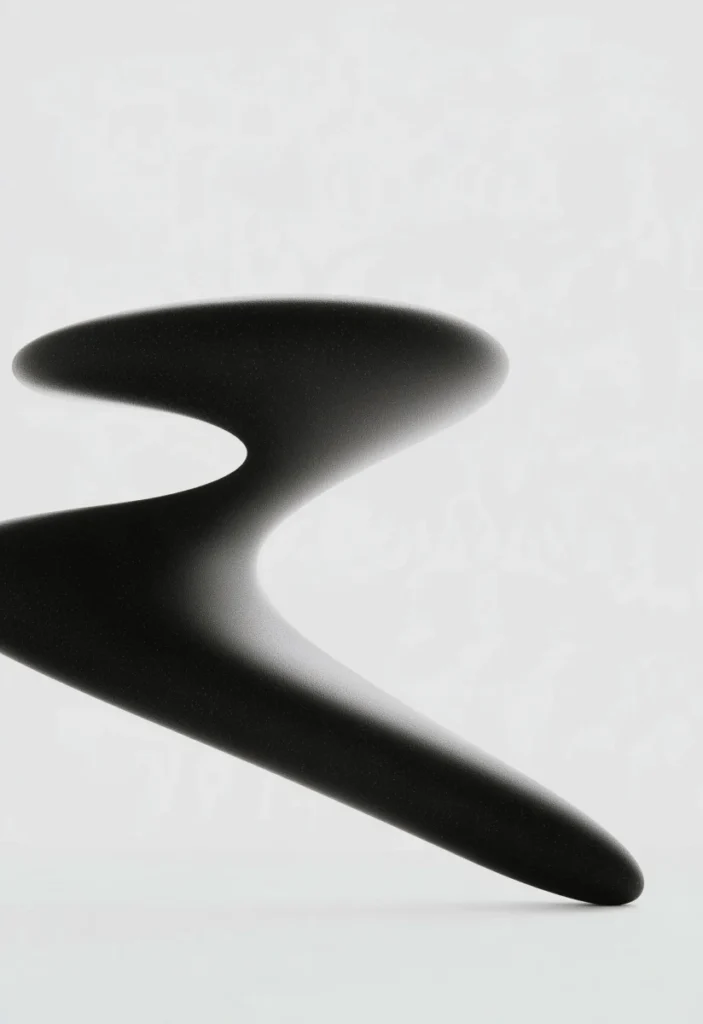
A bowl with a rim that dips on one side can look as though it’s leaning, even when its base sits flat on a shelf. From across the room, the dip is the first thing the eye picks up. Follow the rim a little farther and it rises again. A small change in height is enough to give the bowl a direction.
A brushstroke can do something similar. Where the brush first comes down, the ink gathers. Farther along, the bristles separate and leave thin streaks of paper showing through. The stroke has been dry for years, but the way the ink thins lets the eye follow the hand as it lifts.
With a sculpture, the sense of movement can come from how little of it seems to touch the ground. A broad curve narrows to a single point and the rest of the form appears to hang in the air. From one side it looks about to tip. Take a step around it and the same curve looks as though it has just swung back into place.
Walk past the shelf and the bowl seems to straighten. From the side, the high and low points of the rim come into view together, and the lean you saw from across the room becomes a shallow wave. A few steps are enough to see the same bowl make two different gestures.

Leave a Reply